Case Study
The Efficiency Flip: Less Pages, More Revenue
An E-commerce brand with “decent” authority was plateauing. The problem? Fragmented authority and index bloat.
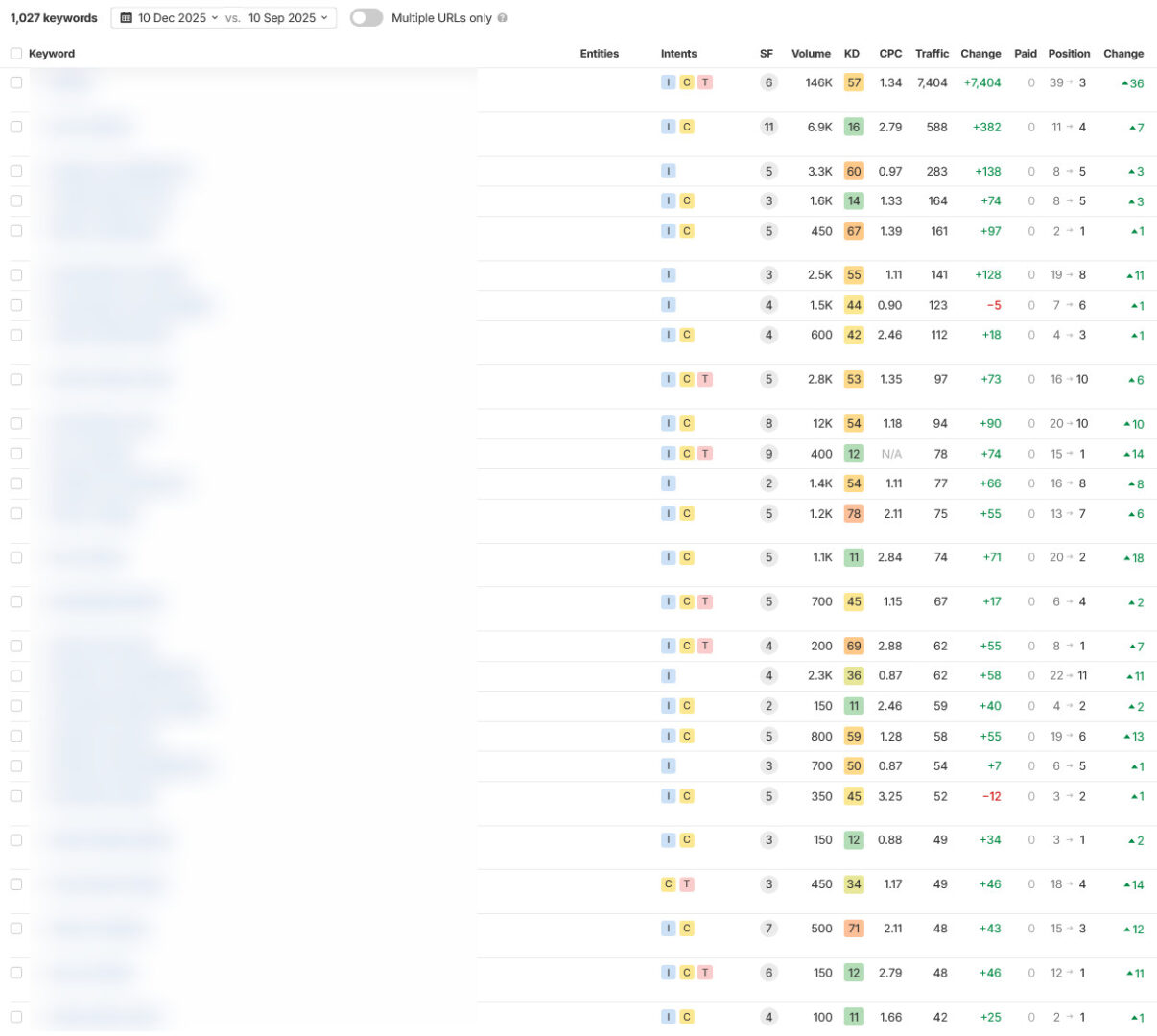
We pruned the site by 40%, fixed the internal link flow, and injected $5k of fresh root-level links. The result was a massive uptake in transactional intent, moving high-KD keywords from page 3 directly to the top 3.
CAMPAIGN PERFORMANCE
3 MONTH SPRINT
↗
Organic Traffic
33,000 → 42,000 (+27%)
✂
Index Efficiency
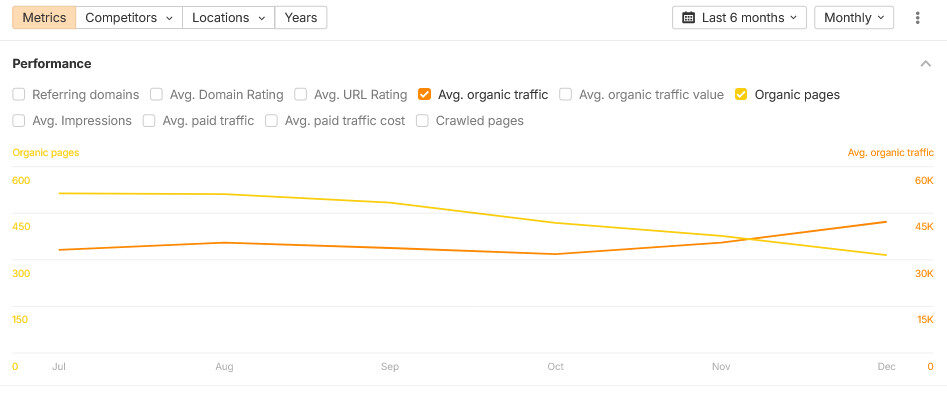
515 → 315 Pages (Pruned)
★
Main Keyword (146k Vol)
Rank #39 → Rank #3
✓
High KD Terms (40+)
Multiple Page 1 Breakthroughs
INVESTMENT: $5,000
ROI: POSITIVE
The Diagnosis
Root Decay &
Root Decay &
Equity Hoarding
We ran a comprehensive Link Gap Audit to pinpoint why rankings were stagnant despite a “decent” backlink count. The data revealed a structural failure in how authority was moving through the site.
Fragmented Authority
Informational pages (blogs, guides) were gathering natural backlinks, but they were “hoarding” that equity. The link juice was trapped and not flowing to the commercial pages.
Root Velocity Decay
The homepage—the engine of the site—was stagnant. Competitors were building links to their root, while this brand was only growing “wider” with more blog content, not “stronger.”
Index Bloat
With 515 organic pages, the crawl budget was wasted on thin, low-value content, diluting the perceived quality of the entire domain.
AUDIT_RESULT: LINK_EQUITY_FLOW
CRITICAL
Informational Pages (Blogs)
High / Trapped
Root Domain Authority
Decaying
Commercial Pages (Products)
Starved
DIAGNOSIS: Link equity is failing to reach transactional URLs. Root injection required.
The Execution Plan
STEP 01
Aggressive Index Pruning
Quality over quantity. We identified thin, cannibalizing, and low-value content and removed it from the index. Organic pages dropped from 515 to 315, consolidating crawl budget to the pages that actually drive revenue.
NY Post
Canva
AZCentral
Informational Asset
“Health Blog Posts / Guides”
↓
Shop Category A
Shop Category B
STEP 02
Optimizing Internal Flow
Our audit revealed “equity hoarding.” Informational pages had gathered powerful backlinks (from major publications) but weren’t linking to money pages. We added strategic internal links to funnel that authority directly to commercial categories.
ROLLBACK
// header-structure.html
– <h2>Generic Welcome</h2>
– <div class=”hero-slider”>
+ <h1>Main Keyword Title</h1>
+ <p class=”intro”>Intent focused…</p>
STEP 03
Correcting UX Mistakes
Sometimes “new” isn’t better. Recent design implementations had disrupted the heading hierarchy and user experience, causing adverse ranking effects. We reverted these specific elements to restore clarity for both users and crawlers.
Page Title (<title>)
Buy Organic Coffee Beans Online | Brand
INTENT: TRANSACTIONAL
Main Heading (<h1>)
Premium Roasted Coffee Beans
MATCH: EXACT
STEP 04
Key Page Alignment
We tightened the on-page signals. We aligned H1 tags, Title tags, and intro copy on key landing pages to ensure they perfectly matched the commercial intent behind the target keywords, removing any ambiguity for the search engine.
Next: A Fresh Set of Authority Links
With the technical foundation stabilized and the internal “pipes” unclogged, we needed fuel. We launched a targeted campaign to rebuild the root domain’s authority and close the gap with the market leaders.
COMPETITOR_GAP.XLS
STATUS: FILTERED
DOMAIN
COMP 1
COMP 2
YOU
Prospect_A.com
✓
✓
GAP
Prospect_B.org
✓
–
GAP
Prospect_C.net
–
✓
GAP
Prospect_D.co
✓
✓
GAP
Step 1: Link Gap Analysis
Finding The Missed Opportunities
We audited 20 direct competitors and ran a massive link gap analysis. We identified over 30 high-value sites where competitors had secured coverage, but our client was invisible.
The Logic: If a site is linking to a direct competitor, they are already primed to link to us. These links have proven value in the specific SERPs we want to win.
We filtered these prospects ruthlessly—removing any sites with “fake” traffic or spammy profiles—and started a campaign to secure 20 links from this specific list.
MiamiHerald.com
Guest Post
DR 86
550K
Lifeandstylemag.com
Editorial PR
DR 74
280K
BBNtimes.com
Guest Post
DR 73
165K
GlobalBioEnergy.org
Niche Edit
DR 53
30K
Step 2: The Campaign
Root Injection Strategy
In addition to the gap targets, we scouted 25 complementary sites with 5k+ traffic and RD500+ that were ranking for valuable keywords without directly competing.
With an allocated budget or $3k / mo we secured 40 links over 3 months, split 70% Guest Posts / Editorials and 30% Niche Edits.
- Root Focus: We pushed heavily to the Homepage using Brand, Partial-Brand, and Naked anchors to reverse the authority decay.
- Inner Pages: Key category pages received “Broad” and “Safe” anchors to maintain natural ratios while boosting ranking power.
The Outcome
Traffic Velocity &
Traffic Velocity &
Intent Shift
Organic traffic climbed from 33k to 42k. While a 9k volume increase is solid, the real win lies in the quality of that traffic.
By shifting focus from specific keywords to broad Brand Authority, we triggered a site-wide trust signal. This resulted in a massive uptake in transactional keywords.
The most notable win was a high-volume commercial term (146k searches/mo) jumping from Page #3 straight to Position #3. Several other KD40+ keywords moved to Page 1, delivering an exceptional ROI on the $5k campaign budget.
+27%
Traffic Growth
Top 3
High Vol Keywords
High
ROI on $5k
Verified Growth